
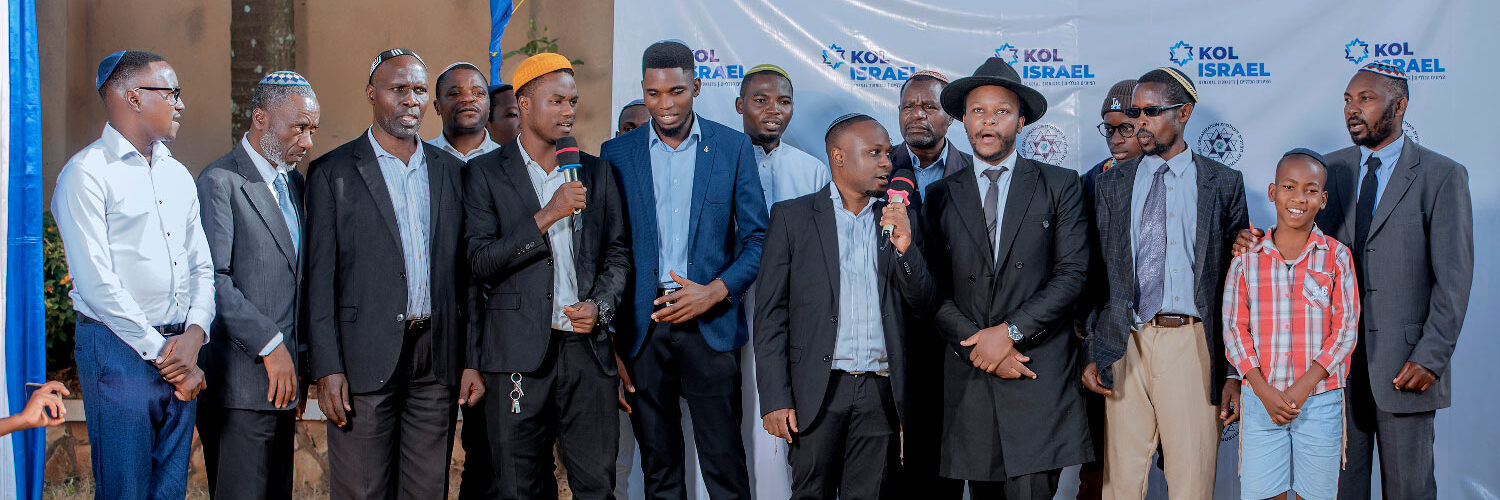
About MOJC
The journey of the Mukono Jewish Community (MOJC) began as a fragile, heartfelt dream. In the early months of 2019, a small but determined circle of men and women, their hearts ignited by a shared spiritual hunger, searched tirelessly for a physical space to call their spiritual home. They envisioned more than just a meeting place; they yearned for a mikdash me’at, a miniature sanctuary where their fledgling community could root itself. On February 14th, 2019, their perseverance was rewarded. The first Shabbat in that humble space was electric with emotion. As candles were lit and prayers rose in unison, a profound sense of belonging settled over them. This was not merely a rented room; it was the seed of an identity, a place where their collective “we” was finally uttered with the confidence of home.
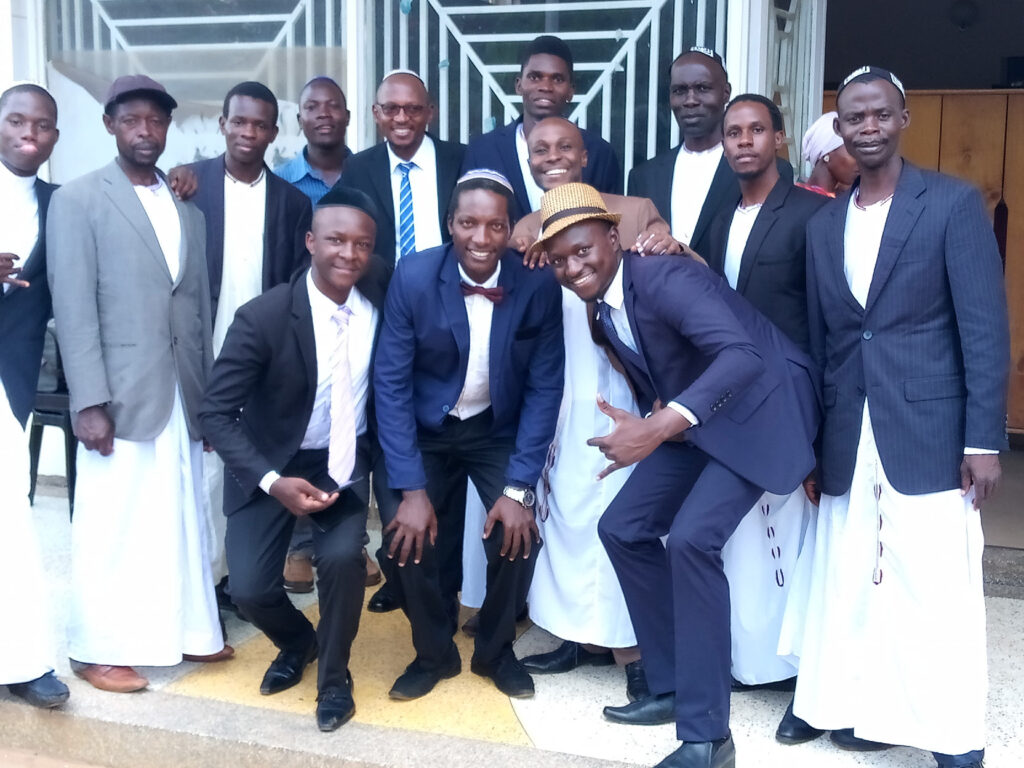
Bolstered by the warmth of their first gatherings, the community’s gaze turned inward to the requirements of a sustained Jewish life. Eager to walk the path of Halacha fully, they invited esteemed rabbis from the eastern region, Rabbi Enosh and Rabbi Moshe, to guide them. The rabbis’ visit was a validation, but it also framed a critical challenge: many members aspired to formal conversion. Seeking higher guidance, the leadership inquired with the rabbis of Efrat in Israel. The answer was clear and pivotal: a community must have a mikveh. The project, daunting yet essential, instantly became a communal mission. Plans were drafted, roles were assigned, and every member—from the eldest to the youngest—found a way to contribute. Sweat, savings, and sheer willpower were poured into the construction. Within a remarkably short few months, a functional, albeit incomplete, mikveh stood ready. It was a rudimentary promise of purity, a tangible step toward a future they could now almost touch.
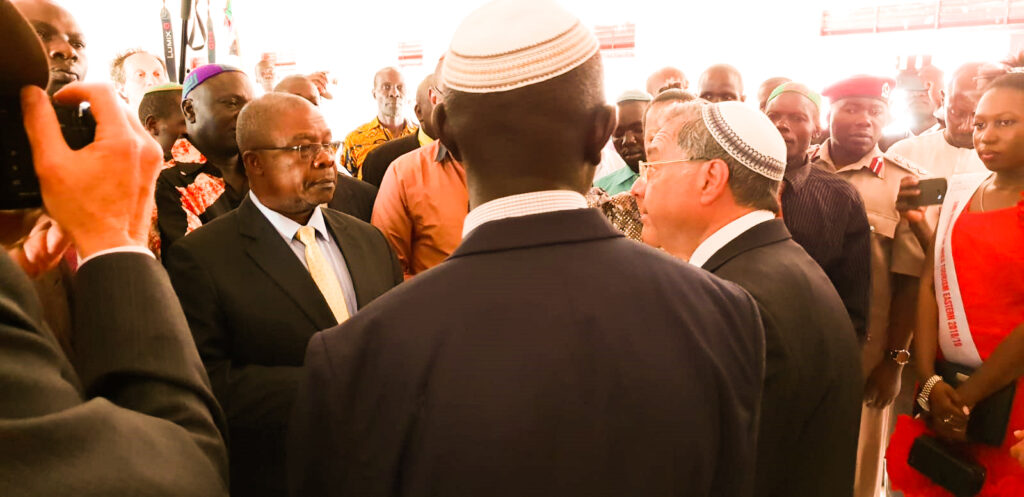
This era of grassroots building unfolded against the backdrop of a national Jewish celebration: the 100th anniversary of the Abayudaya Jews of Uganda. As part of the organizing committee for the centennial festivities in Putti, MOJC found itself connecting to a century-old legacy. The event drew a tapestry of dignitaries—from Ugandan government officials to international guests. Among them was a figure whose visit would alter the community’s trajectory: Rabbi Shlomo Riskin, Chief Rabbi of Efrat. His specific interest was the new community in Mukono. Watching them pray, learn, and embody Jewish practice, Rabbi Riskin was visibly moved. He saw not just enthusiasm, but discipline; not just desire, but depth. Before departing, he made a transformative promise: he would send a Beit Din to guide them through conversion. His words were a lightning bolt of hope, electrifying the community with a clear, spiritual goal.
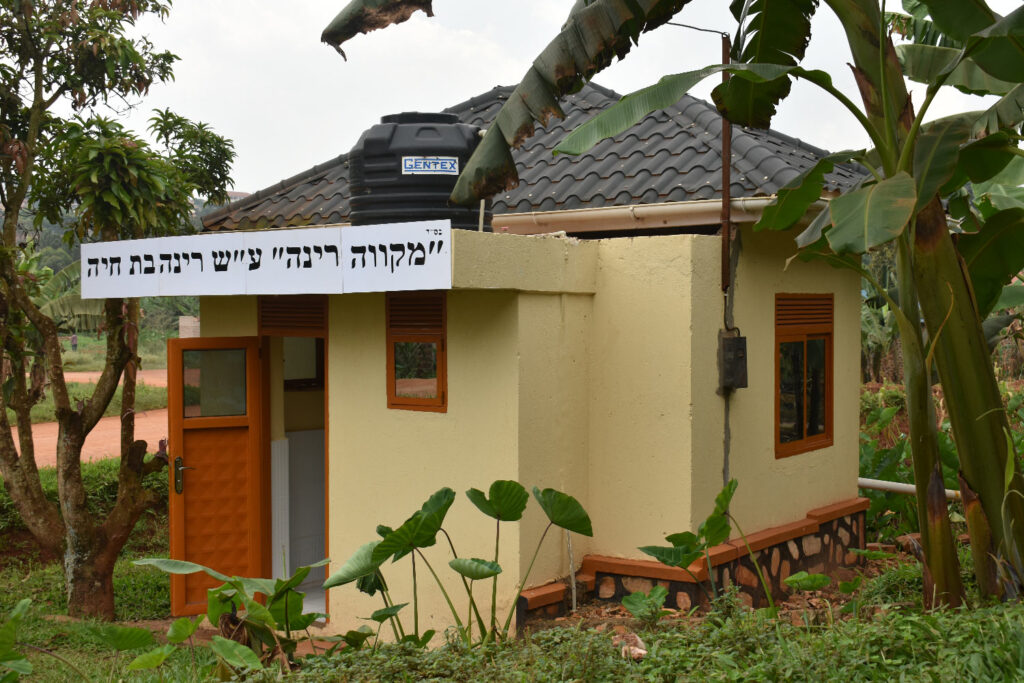
True to his word, Rabbi Riskin initiated the conversion process from Israel. The community’s guide became Rabbi Abe Reichman, who visited Mukono three times over six months. Each visit was an immersive examination of their lives—their knowledge, their commitment, the very fabric of their community. Rabbi Reichman was “amazed by the zeal,” but he also provided the rigorous instruction needed. His final report would pave the way for the Beit Din, but first, the mikveh needed to be perfected. The initial, utilitarian structure had to become a mikveh taharah of impeccable standard. This final push became a symphony of devotion. Under the meticulous supervision of Rabbi Stuart Fisherman, the community rallied once more. The project was blessed by the generous sponsorship of Mr. Yosef Gabbay (Yossi), who dedicated it in loving memory of his mother, Rinah bat Haya, giving the mikveh its eternal name. The relentless on-site coordination by Illier Waako ensured no detail was overlooked. When the last tile was set and the waters were gathered, they had created more than a ritual bath; they had built a vessel for spiritual rebirth.
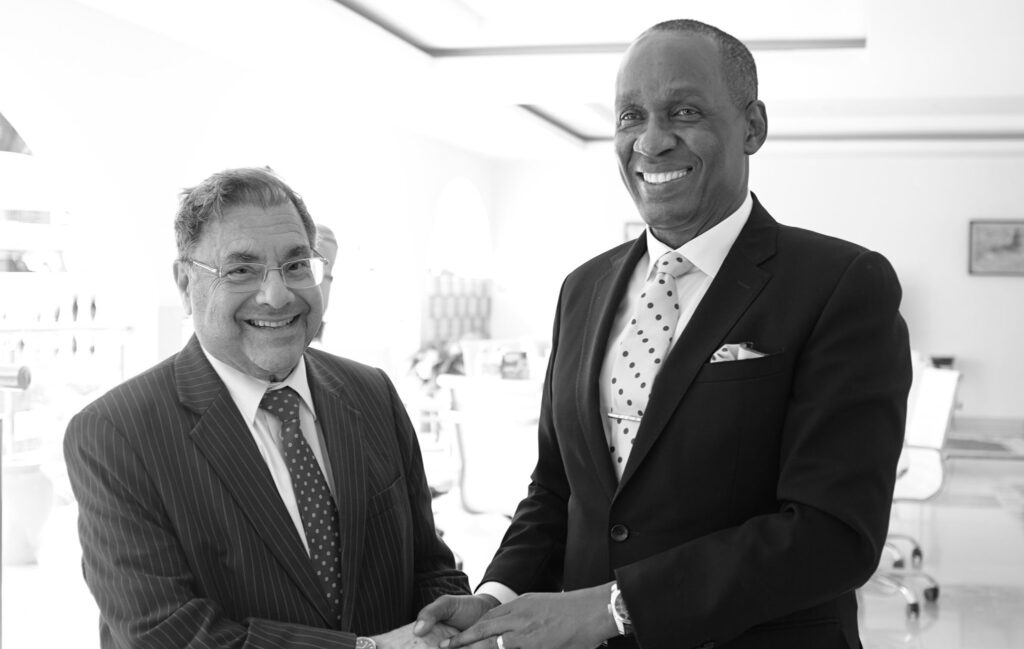
With its physical and educational foundations solidified, the community turned to the practical necessities of institutional life. Operating informally was no longer tenable; they needed to open bank accounts, receive donations transparently, and operate with legal authority. The leadership, therefore, embarked on the detailed process of registering as a Community-Based Organization (CBO). On November 19th, 2019, the Mukono Jewish Community was formally inscribed into the official records of the local government. This was not merely bureaucratic; it was the moment the abstract community crystallized into a formal entity, a recognized body with the standing to build its future.
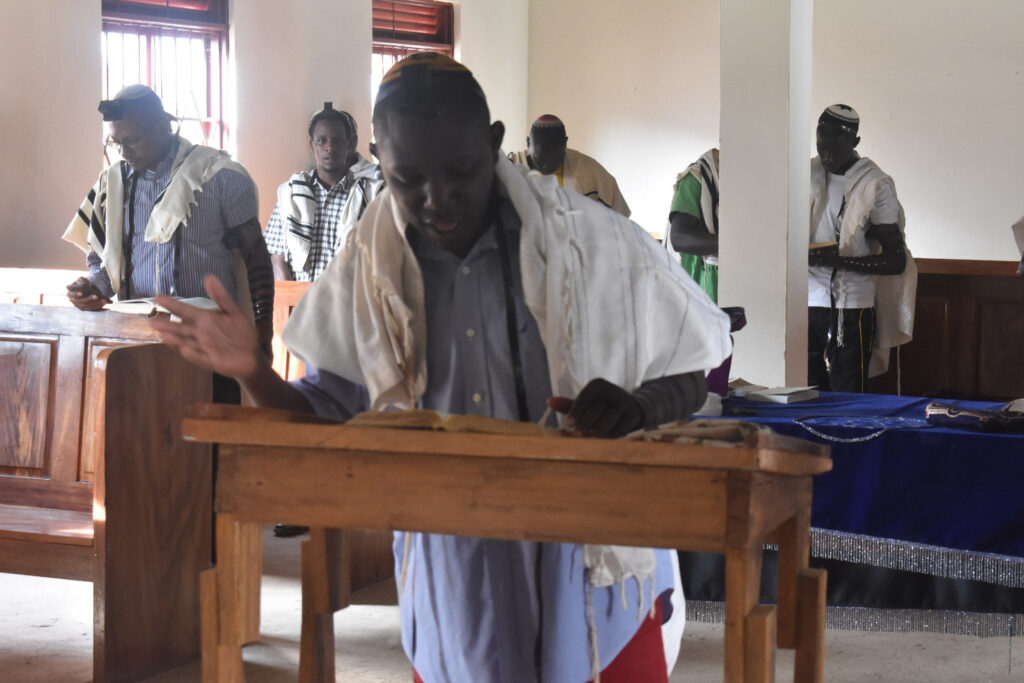
All these strands of effort—spiritual, physical, and administrative—converged in a moment of sublime joy in April 2022. Under the auspices of the visiting Beit Din, the members of MOJC stood one by one to receive their long-awaited conversion certificates. Tears mingled with smiles; handshakes turned into embraces. This was their “practical passing of a test,” a sacred affirmation that resonated as the highest achievement since that first, tentative Shabbat. It was a new dawn, not of becoming Jewish, but of being recognized as such, a closing of one circle and the glorious opening of another.
This hard-won growth, however, brought new complexities. The responsibilities that once rested on the shoulders of a single Gabbai were now overwhelming. The community wisely recognized that its structure needed to evolve with its size. Thus, a council of “Gabbaim” was formed—a decentralized leadership body where specialized roles (finance, education, events, youth) were distributed among trusted individuals. This was a transformative milestone in governance, ensuring that the community’s heart could keep pace with its expanding limbs.
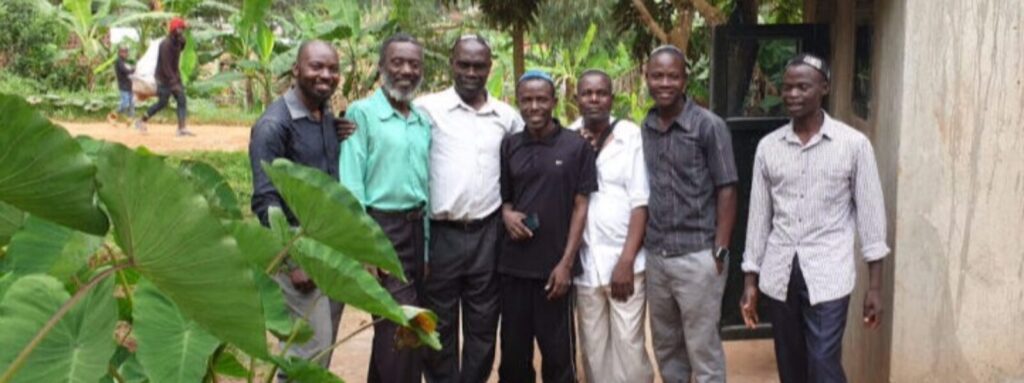
Empowered by this efficient new structure and driven by grander visions, MOJC soon outgrew its local CBO status. To operate nationally, to forge partnerships across Uganda, and to realize its broader dreams, it sought and achieved registration with the Uganda Registration Services Bureau. This upgrade to national status was a strategic leap, moving MOJC from a local initiative to a player on the national stage.
This elevated standing was soon demonstrated in a moment of great pride. In collaboration with TBM (Tsyon Beit haMichdash), MOJC took a leading role in organizing and hosting the historic inauguration of the Zionist Movement Uganda. The presence of the Israeli Ambassador as Guest of Honor was a powerful testament to the community’s credibility and its active role in shaping the future of Ugandan Jewry.

Yet, amidst these public achievements, the most profound moment was one of intimate sanctity: the arrival of the community’s first Sefer Torah. As the scroll was carried under the chuppah, danced through the streets of Mukono, and placed reverently in the Ark, the entire journey flashed before their eyes. The search for a home, the mixing of mortar for the mikveh, the solemnity of the Beit Din, the joy of the certificates—all of it was for this. The Torah was the living heart now beating in the center of their home, the ultimate symbol of their covenant, their resilience, and their everlasting bond. From a dream in a rented room to a nationally recognized community cradling its own Torah, the tapestry of MOJC was now complete, vibrant, and strong.