
Community Life
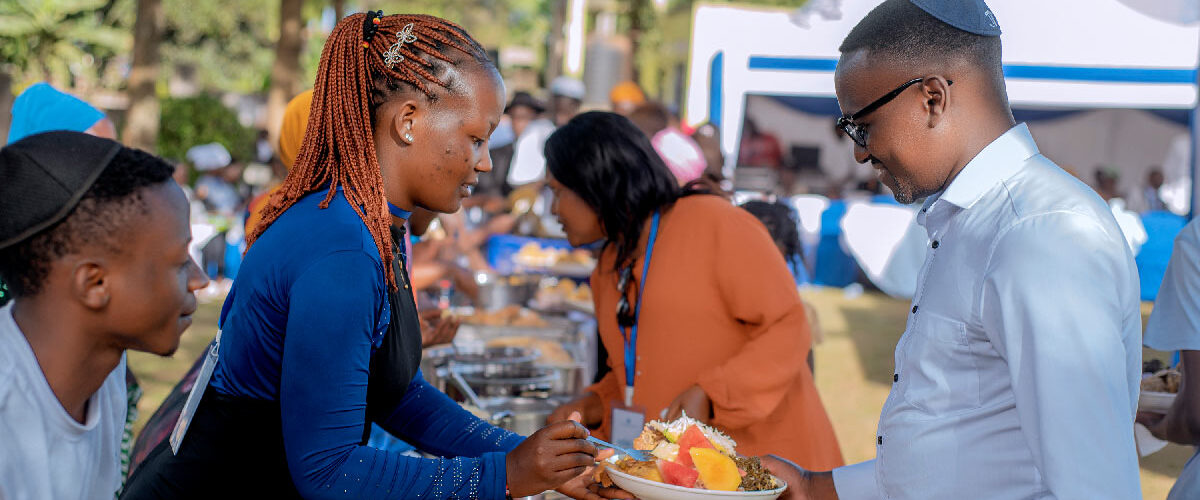
On a typical weekday morning, the MOJC homes hum with activity that reflects the community’s comprehensive approach to Jewish living. It is Shacharit time. Children in uniform pass through on their way to secular schools, their school fees partially covered by community sponsorship programs. Adults gather for Shacharit prayers before dispersing to various communal enterprises. The aroma of cooking wafts from the community kitchen, where preparations begin for the day’s meals. This is Jewish life in Mukono — not confined to Shabbat and holidays, but woven into the fabric of daily existence.
Sacred Time: The Festival Cycle
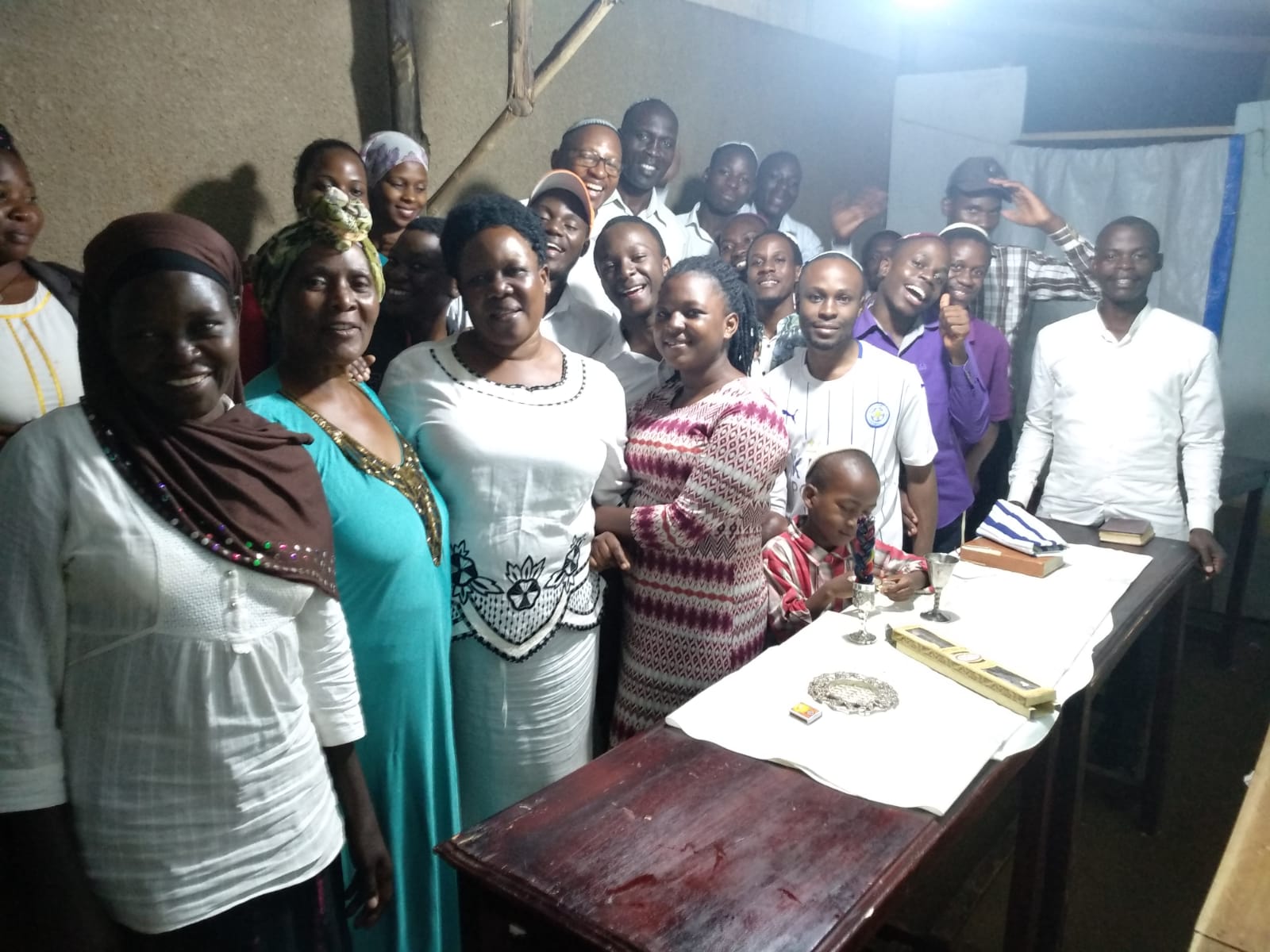
At the heart of MOJC’s communal life stands the observance of the Torah-mandated festivals, which unite the scattered community in shared sacred time. With members residing across Mukono District and beyond, the festivals provide vital opportunities for gathering, celebration, and collective spiritual experience.
“The festivals are when we truly become one community,” explains Benjamin ben Avraham, one of the community’s Gabbaim who coordinates holiday logistics. “During ordinary weeks, we see each other for Shabbat and study. But during Pesach, Shavuot, and Sukkot, we live together for days at a time. That is when the community feels like a family.”
Passover in Mukono has developed its own distinctive character, blending traditional observance with Ugandan context. In the weeks leading up to the festival, the community conducts intensive chametz-cleaning campaigns in members’ homes. A communal model seder, held in the synagogue compound, attracts not only community members but also curious neighbors and invited guests. The Haggadah, adapted to include reflections on the community’s own journey from spiritual searching to established Jewish life, resonates with particular power for members who remember their pre-conversion days.
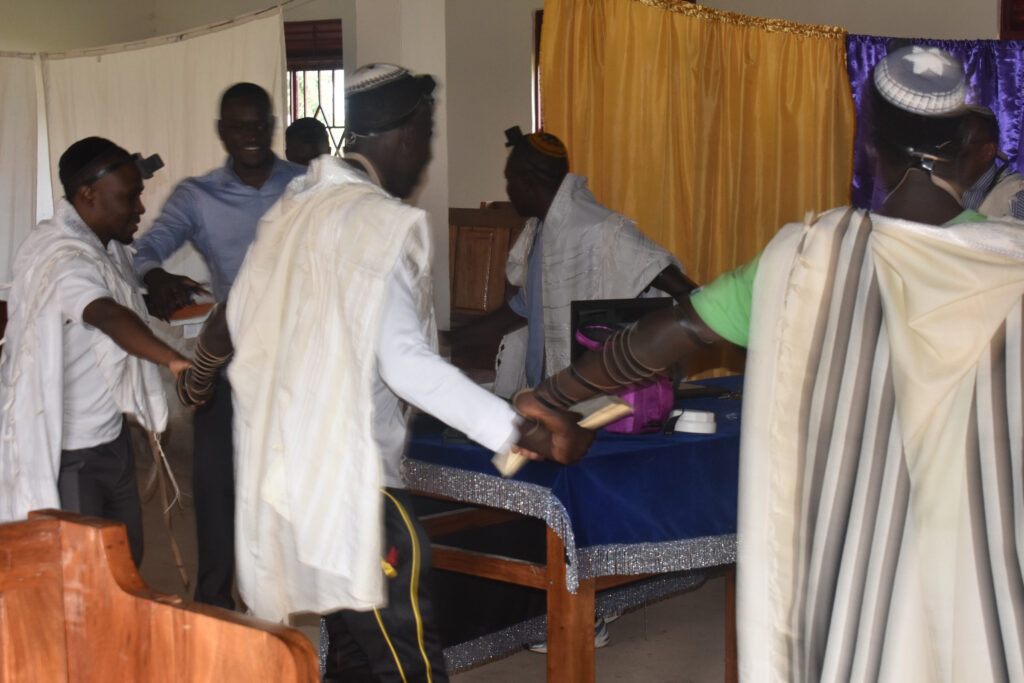
“The Exodus from Egypt mirrors our own story,” one community elder reflected during a recent interview. “We were slaves to confusion, to not knowing our place in the world. Now we are free — free to serve God as Jews, with our own Torah, our own community, our own future.”
Shavuot brings intensive all-night learning, with the community’s Beit Midrash program hosting marathon study sessions that stretch from sunset to sunrise. The holiday’s agricultural themes resonate deeply in Uganda’s farming context, and community members bring first fruits from their gardens to decorate the synagogue.
Sukkot transforms the compound into a village of temporary dwellings. Families construct their own sukkot, but a large communal sukkah serves as the gathering point for meals and celebrations. The Ugandan climate, with its dry season timing, proves ideal for dwelling outdoors, and children particularly relish sleeping in the sukkah under mosquito nets and stars.
The High Holy Days represent the community’s largest gatherings. Rosh Hashanah and Yom Kippur draw members from the farthest reaches of the community’s geographic spread, with some traveling for hours to participate. The shofar, crafted by community artisans, sounds across Mukono — a Jewish call to repentance rising in a predominantly Christian landscape.
Beyond the festival cycle, MOJC has developed an ambitious health initiative that reflects the community’s commitment to its members’ physical wellbeing. Recognizing that healthcare costs pose a significant burden for many families, the community established a collective health insurance program that now covers the majority of member households.
“We realized that spiritual health cannot flourish when bodies are suffering and families are crushed by medical bills,” explains Yaakov ben Avraham, who coordinates the health initiative. “The Torah commands us to choose life. That means helping each other stay alive and healthy.”
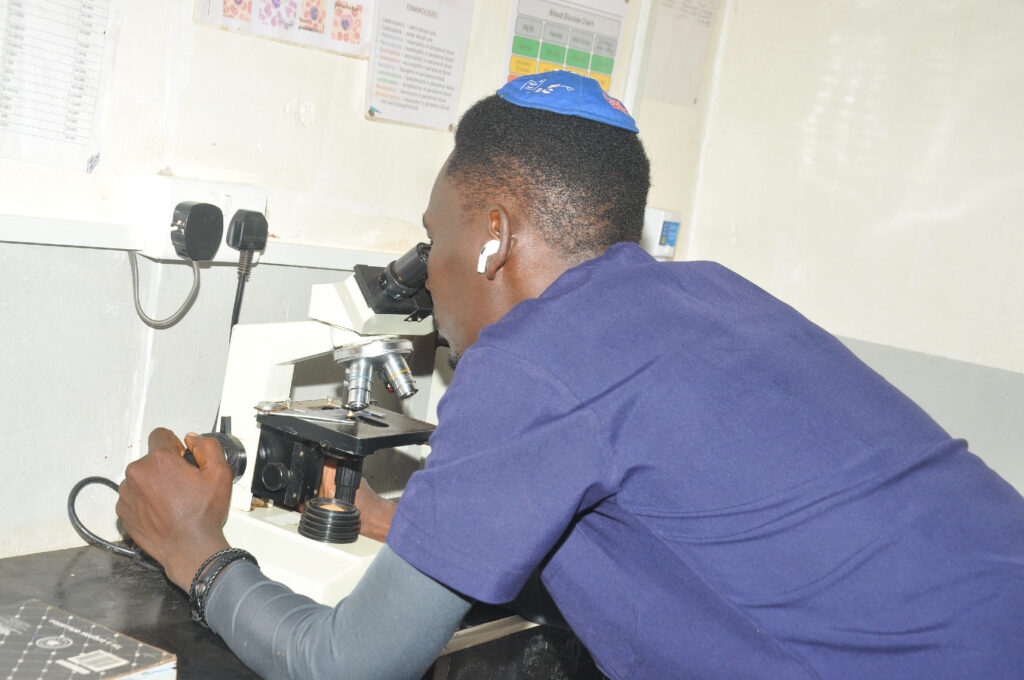
The health insurance program operates on a cooperative model, with members contributing according to their means and the community negotiating group rates with local healthcare providers. The system has proven particularly vital for maternity care, chronic disease management, and emergency interventions that would otherwise remain out of reach for many families.
But the community’s health vision extends beyond insurance. MOJC has rented space and begun preliminary planning for what members refer to simply as “the hospital” — a community-owned healthcare facility that would provide services to both Jewish and non-Jewish residents of Mukono District.
“We dream of a hospital that reflects Jewish values,” the health coordinator continues. “A place where every person is treated with dignity, where the poorest receive the same care as the wealthiest, where the name of God is honored through healing. This is not a distant dream. We are already speaking with partners, already planning, already believing.”
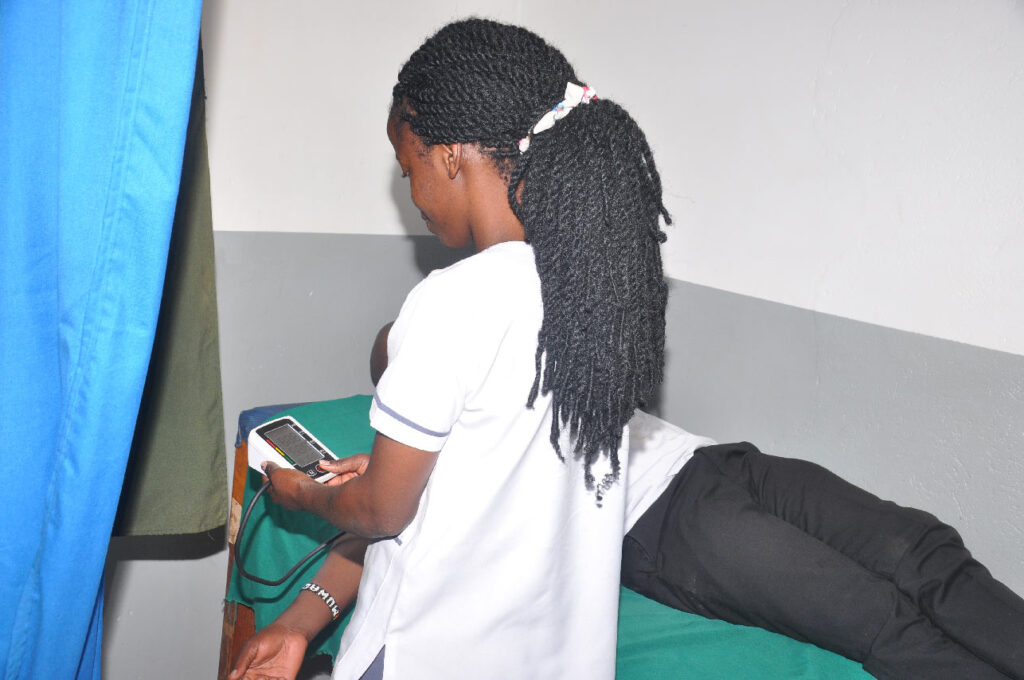
The proposed hospital represents the community’s conviction that Jewish life cannot be separated from service to the wider society. Drawing on the Jewish value of pikuach nefesh — the saving of a life as the highest commandment — MOJC envisions a facility that would demonstrate Judaism’s commitment to human welfare through practical action.
Sustaining the Community: The Model Farm
Alongside the health initiative, MOJC has developed a model farm project designed to enhance food security, generate income, and demonstrate sustainable agricultural practices. Located on community-owned land, the farm serves multiple purposes that reflect the community’s integrated vision.
“We do not want to depend on donations forever,” states Michael ben Avraham, who manages the farm project and also doubles as the general secretary of the community. “The Torah teaches us that we must work with our hands. God gives the blessing, but we must plant the seeds. This farm is our way of partnering with God in sustaining this community.”
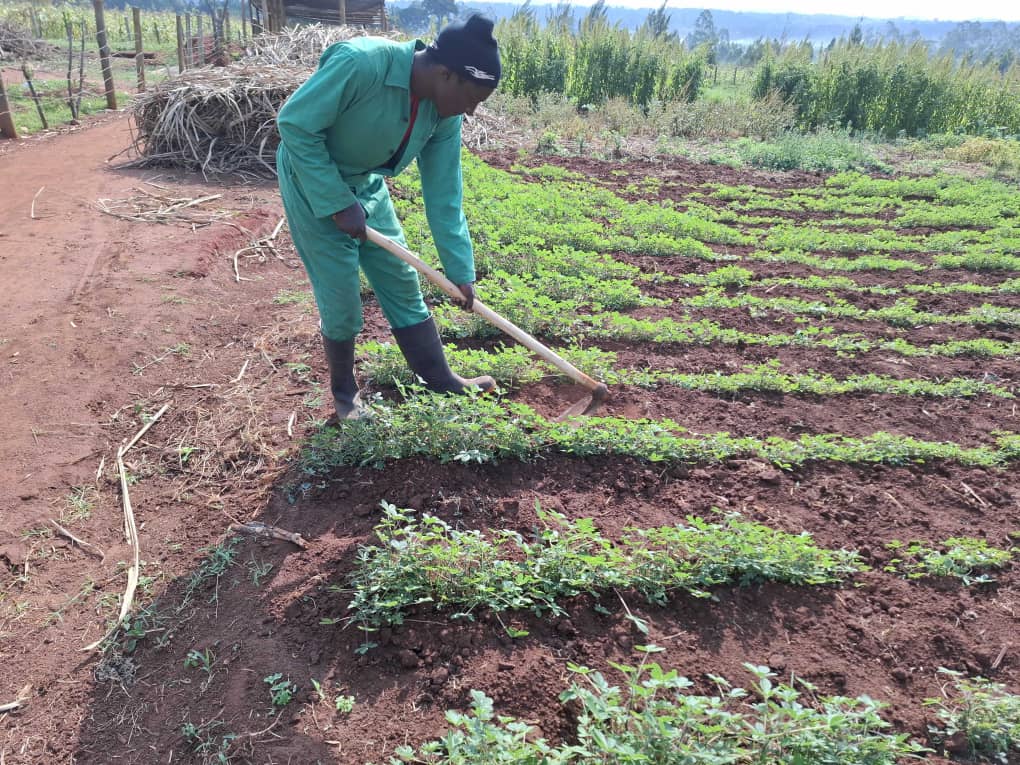
The farm incorporates both crop cultivation and animal husbandry, with careful attention to halachic requirements. Vegetables, fruits, and staples are grown using organic methods, with surplus sold in local markets to generate income for community programs. A dairy operation, developed with guidance from agricultural experts, provides milk for community members and a potential foundation for future kosher cheese production.
Chickens supply eggs, and plans are underway to expand into fish farming utilizing Uganda’s abundant water resources. The farm also serves as an educational site, teaching members sustainable techniques they can implement on their own smallholdings.
“Many of our families are farmers,” the Michael explains. “If we can teach them better methods, if we can provide them with quality seeds and breeding stock, their own farms become more productive. The community farm is not separate from their lives — it is a resource for their lives.”
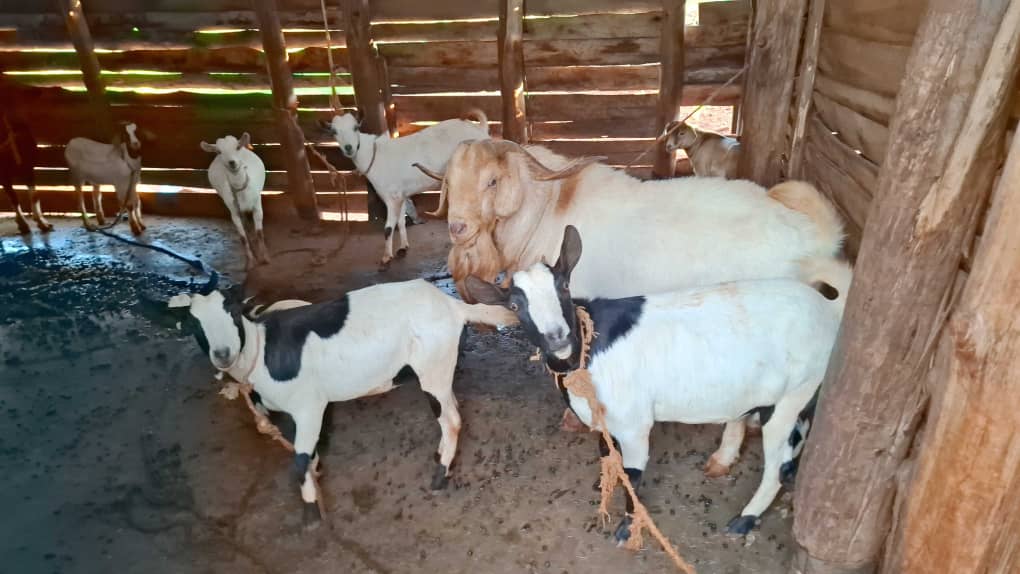
The farm’s location adjacent to the community compound means that the rhythms of agricultural life intertwine with the rhythms of Jewish observance. Workers pause for afternoon prayers among the crops. The harvest festival of Sukkot takes on immediate meaning when the produce being celebrated comes from fields the community has tended with its own hands.
Educating the Next Generation: Beit Midrash and Beyond
Education stands at the center of MOJC’s vision for continuity. The community operates an intensive Beit Midrash program that provides structured Jewish learning for members at all levels, from children receiving their first Hebrew letters to adults engaged in advanced text study.
“The Beit Midrash is where we build our future,” declares Hoshea ben Avraham, head of the education committee. “Without knowledge, without understanding, without the ability to read our texts and think with our tradition, we cannot sustain Jewish life. Every member of this community is also a student.”
The Beit Midrash operates on multiple tracks. Children attend after-school and Sunday sessions where they learn Hebrew reading, prayer, Torah stories, and the basics of Jewish practice. Teenagers progress to more advanced study, preparing for the bar and bat mitzvah ceremonies that the community now conducts with its own Torah scroll. Adults participate in weekly classes covering topics from Talmud to Jewish philosophy to practical halacha.
The Beit Midrash faculty includes community members who have advanced their own learning through correspondence courses, intensive seminars with visiting rabbis, and self-study. The community has also begun training its own teachers, recognizing that long-term sustainability requires developing local educational leadership.
Parallel to its Jewish education programs, MOJC operates a sponsorship initiative that supports children’s attendance at secular schools. Recognizing that formal education provides the foundation for economic opportunity, the community pools resources to ensure that no child misses school due to family financial constraints.
“Education is expensive in Uganda,” the education head notes. “School fees, uniforms, supplies — it adds up. Many families cannot afford everything their children need. The community steps in because these children are our children. Their future is our future.”
The sponsorship program currently supports dozens of students at primary and secondary levels, with several now pursuing higher education. Beneficiaries are expected to contribute to the community in turn, creating a cycle of mutual support that strengthens communal bonds.
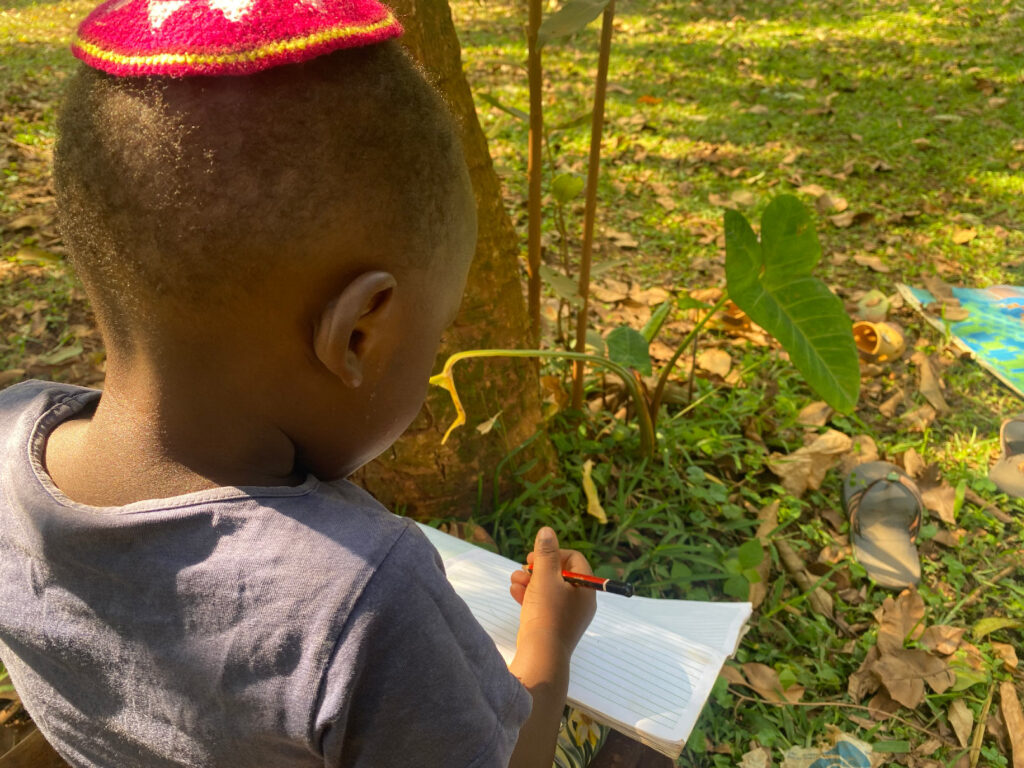
The ultimate educational dream, however, lies in a hybrid institution that would integrate Jewish and secular studies under one roof. MOJC leadership envisions a day school where children receive Uganda’s national curriculum alongside intensive Jewish education — a school that would prepare students for full participation in both Ugandan society and Jewish life.
“We want a school where a child can learn mathematics and Mishnah in the same day,” the education head explains. “Where Jewish identity is not something added after school hours but woven into every subject. Where our children grow up knowing they are both fully Ugandan and fully Jewish, with no contradiction between the two.”
Building the Economy: The Community Shop and Artisan Workshop
Commerce has emerged as another dimension of MOJC’s community development strategy. The community operates a shop and grocery store on its compound, providing members with access to essential goods while generating income for communal programs.
The shop stocks basic food items, household supplies, and a growing selection of products relevant to Jewish observance. Candles for Shabbat, kosher-certified foods, Hebrew calendars, and religious articles share shelf space with rice, soap, and cooking oil. For members living at a distance from urban shopping centers, the shop provides convenient access to both daily necessities and Jewish-specific items.
“We started small,” recalls Elisheva bat Sarah, who manages the shop operations. “Just a few shelves, a few items. But we saw the need. Members were traveling long distances for things we could provide. Now we are growing, and we have bigger dreams.”
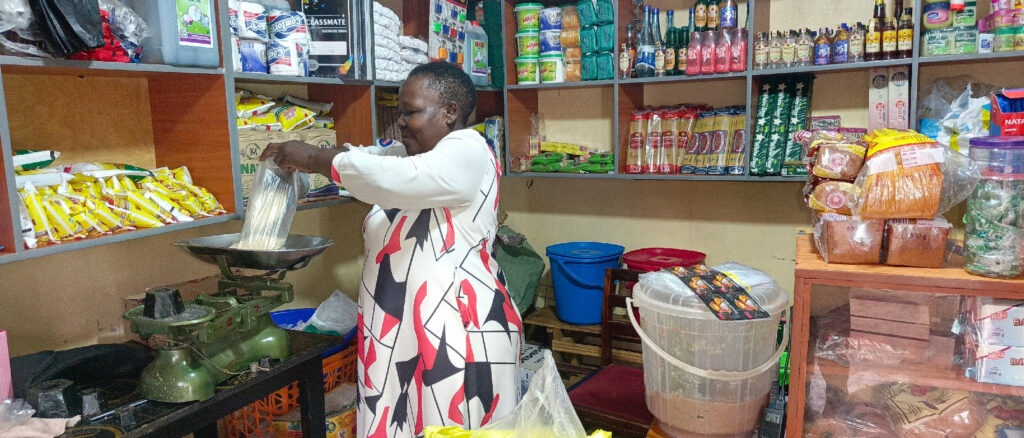
Those bigger dreams center on transforming the current shop into a full-service kosher supermarket — a facility that would serve not only MOJC members but also the broader community of kosher consumers in Uganda, including visitors, diplomats, and international workers.
“A kosher supermarket would change everything,” the shop manager continues. “It would serve our own members, yes, but it would also bring people to us. Visitors would come, see our community, connect with us. It would be an economic engine and a bridge to the wider world.”
Alongside the shop, MOJC operates an artisan and carpentry workshop that has gained reputation for quality craftsmanship. Skilled woodworkers produce furniture ranging from simple household items to custom pieces commissioned by clients across Uganda.
The workshop serves multiple purposes. It provides employment for community members with carpentry skills. It generates income that supports communal programs. It showcases the community’s talents to the wider society. And it produces items needed for Jewish life — from synagogue furnishings to household Shabbat tables.
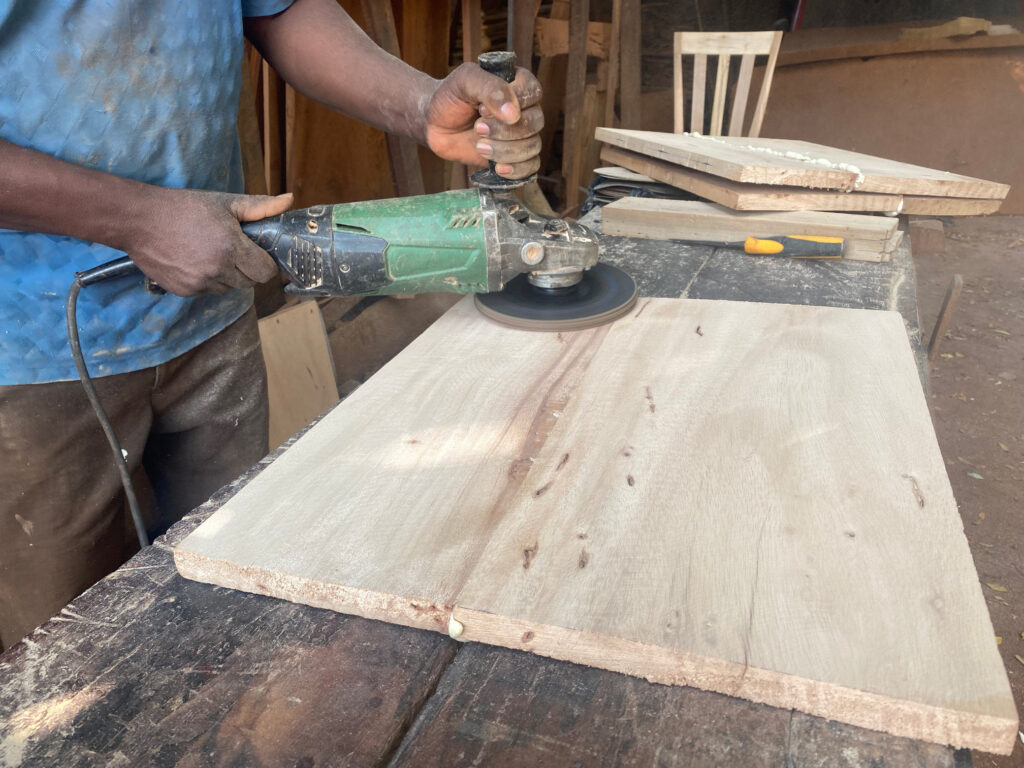
“Our carpenters are artists,” one community member observes with pride. “Look at the Ark that holds our Torah. Look at the bimah where the Torah is read. Look at the tables where we eat on Shabbat. All made by our own hands, right here in Mukono.”
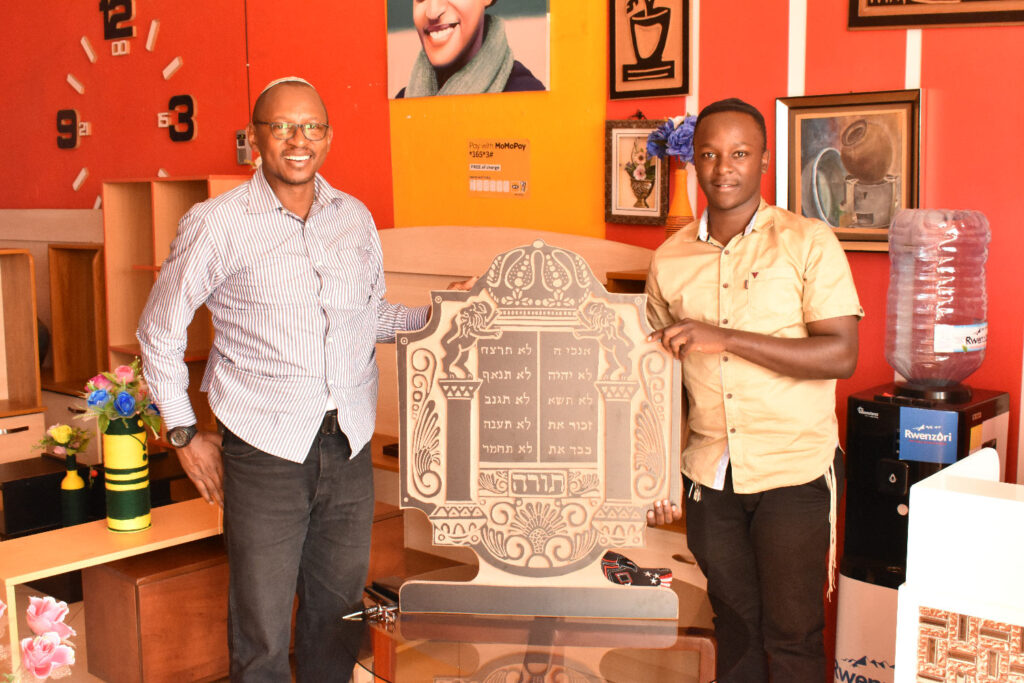
The workshop’s reputation has spread through word of mouth, with orders arriving from Kampala and beyond. Clients appreciate not only the quality of workmanship but also the reliability and integrity of the craftsmen — qualities that reflect the community’s values in commercial practice.
Digital Judaism: The Obuyudaya Daily Bundle App
Perhaps the most innovative of MOJC’s recent initiatives addresses a fundamental challenge facing the community: geographic dispersion. With members scattered across Mukono District and beyond, maintaining consistent Jewish practice and connection proves difficult.
The solution, community leaders believe, lies in technology. The community is developing “Obuyudaya Daily Bundle” — a mobile application designed to serve as a centralized Judaism partner for members navigating daily life at a distance from the communal center.
“Obuyudaya” combines the Luganda word for “Jewish” with a Hebrew construction, reflecting the community’s dual identity. The app, currently in development with input from members and technical volunteers, aims to provide a comprehensive suite of resources for Jewish living.
“We are scattered,” explains Hoshea ben Avraham, who coordinates the app development. “Some members live an hour away. They cannot come to the compound every day. But they can carry Judaism in their pocket. The app is that pocket community.”
The Daily Bundle, as it is known in English, will include multiple features designed to support members’ Jewish practice:
Prayer resources — Texts and audio recordings for daily, Shabbat, and holiday prayers, allowing members to pray correctly even when praying alone.
Zmanim — Accurate times for candle lighting, prayer deadlines, and other time-sensitive observances, calculated for members’ specific locations.
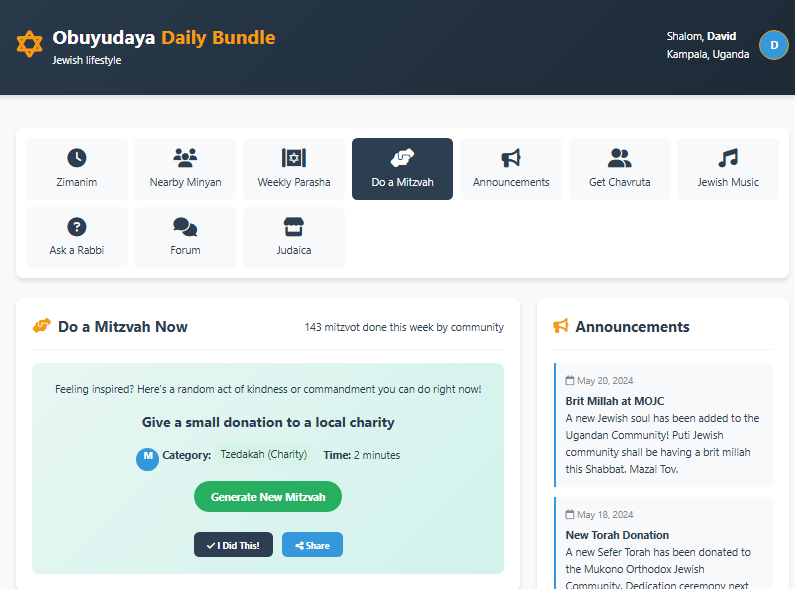
Learning content — Daily Torah insights, lessons from the Beit Midrash, and access to the community’s growing library of Jewish educational materials.
Community connection — News, announcements, and a platform for members to communicate with each other and with leadership.
Halachic guidance — Practical answers to questions about Jewish law as it applies to daily life in the Ugandan context.
Kosher alerts — Information about kosher products available locally and updates on the community’s own kosher certification efforts.
The app’s development reflects MOJC’s conviction that technology can serve tradition rather than undermine it. By putting Jewish resources literally in members’ hands, the community hopes to strengthen observance and connection despite the challenges of distance.
“We are Jews in the modern world,” the app coordinator observes. “We use smartphones, we use the internet, we use whatever tools God gives us. The question is not whether we use technology, but how we use it. We use it to bring Judaism closer, not farther away.”
A Community in Motion
Visiting the MOJC compounds today, one encounters an organization in constant motion. The morning prayers flow into Beit Midrash sessions, which flow into work at the farm or workshop or shop, which flow into afternoon gatherings and evening classes. Community members move through the compounds not as visitors but as participants in a shared enterprise.
The governance structure established through the Gabbaim system enables this complexity. Each initiative — health, farm, education, shop, workshop, app — falls under the oversight of a designated Gabbai who coordinates activities, manages resources, and reports to the community. Regular meetings ensure coordination and prevent duplication.
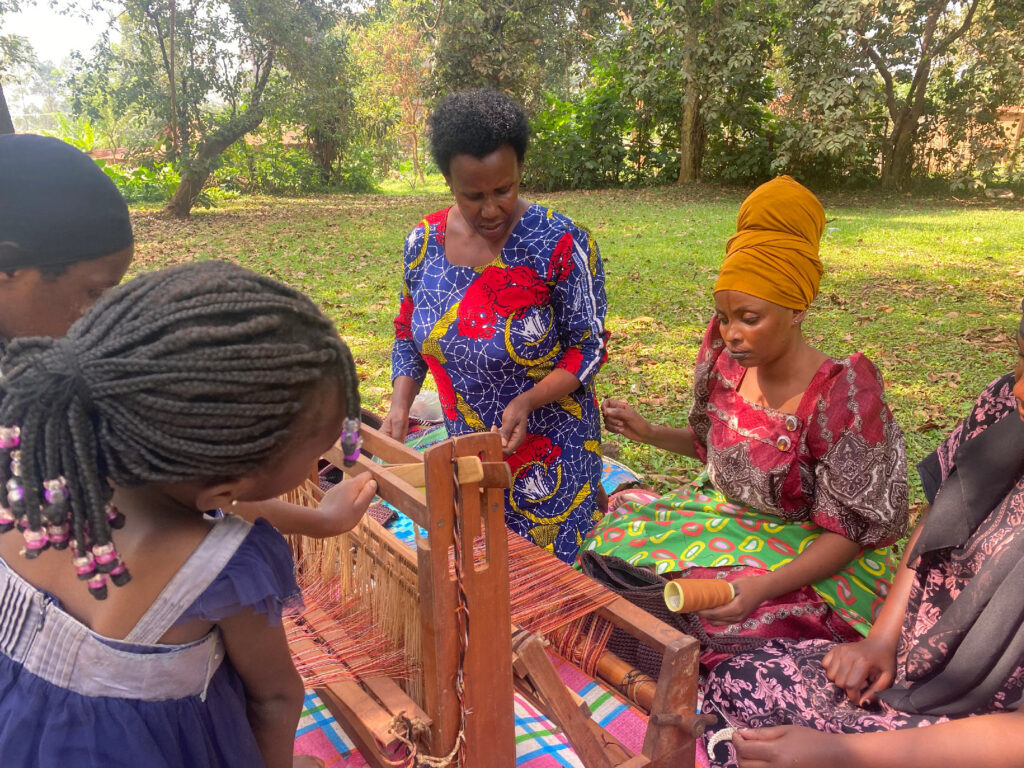
“We are not a synagogue with some extra programs,” one Gabbai emphasizes. “We are a community building Jewish life. That means everything is connected. The farm supports the Beit Midrash. The Beit Midrash educates the children. The children become the future. The shop generates income that pays for the health insurance. The health insurance keeps members healthy enough to work, learn and pray.”
This interconnected vision reflects the community’s understanding of what Jewish life requires. In a context where established Jewish infrastructure does not exist, MOJC must build it — not piece by piece but as an integrated whole.
“When we started in 2019, we were just people who wanted to pray together,” a founding member recalls. “Now look. A farm. A shop. A workshop. A health program. A school sponsorship. An app. We did not plan all of this at the beginning. We just kept asking: what do we need next? And then we built it.”
Challenges and Opportunities
The community’s growth has not been without challenges. Financial sustainability remains an ongoing concern, with many initiatives still dependent on external support. The ambitious vision of a hospital and a day school will require resources far beyond the community’s current capacity.
Geographic dispersion continues to test communal cohesion. While the Obuyudaya app promises to bridge some distance, nothing replaces physical presence. Community leaders worry about members who drift away due to the difficulty of regular participation.
Relations with the broader Ugandan society require ongoing attention. While MOJC maintains good relationships with local government and neighboring communities, Jewish practice in a predominantly Christian context requires constant negotiation and explanation.
Yet the mood within the community remains predominantly optimistic. Each new initiative, each milestone reached, reinforces the conviction that this community is building something lasting.
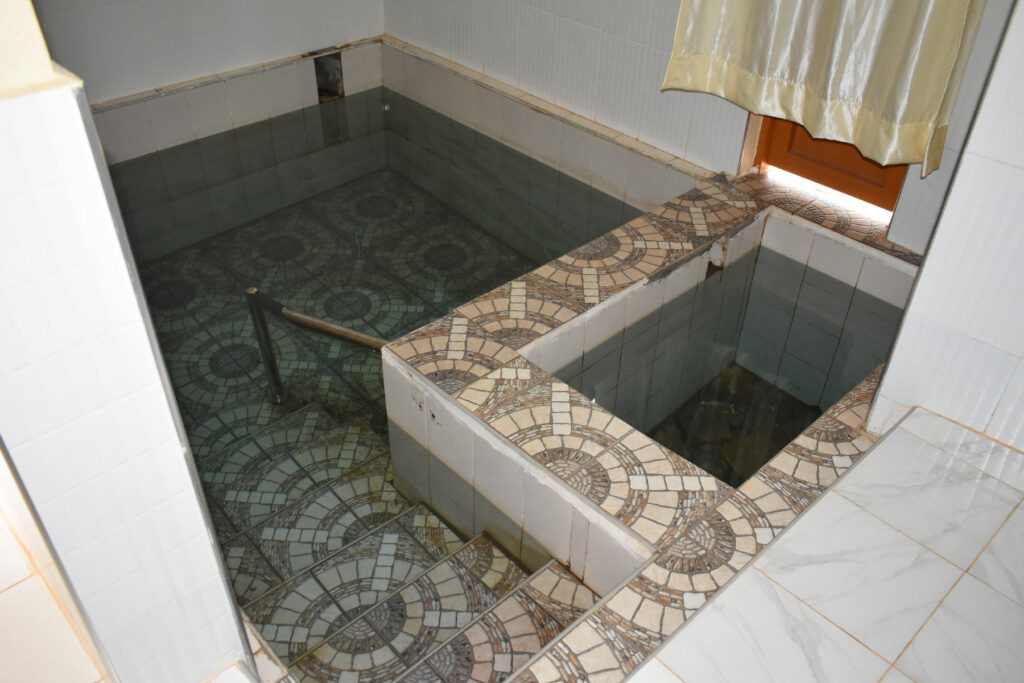
“Look at what we have done in six years,” a community leader reflects. “A mikveh. Conversions. A Torah. A farm. A shop. An app. Now imagine what we will do in the next six years. With Hashem’s help, that hospital will be built. That school will open. That kosher supermarket will serve customers from across Uganda.”
As Shabbat approaches each week, the scattered members begin their journeys toward the community compounds. They come from near and far, carrying their contributions to the communal meal, their questions for the Beit Midrash, their hopes and dreams for this community they are building together.
The candles are lit. The songs rise. The Torah is read. And for one day, the dispersion is forgotten — replaced by the tangible reality of a community at home with itself and with Hashem.