
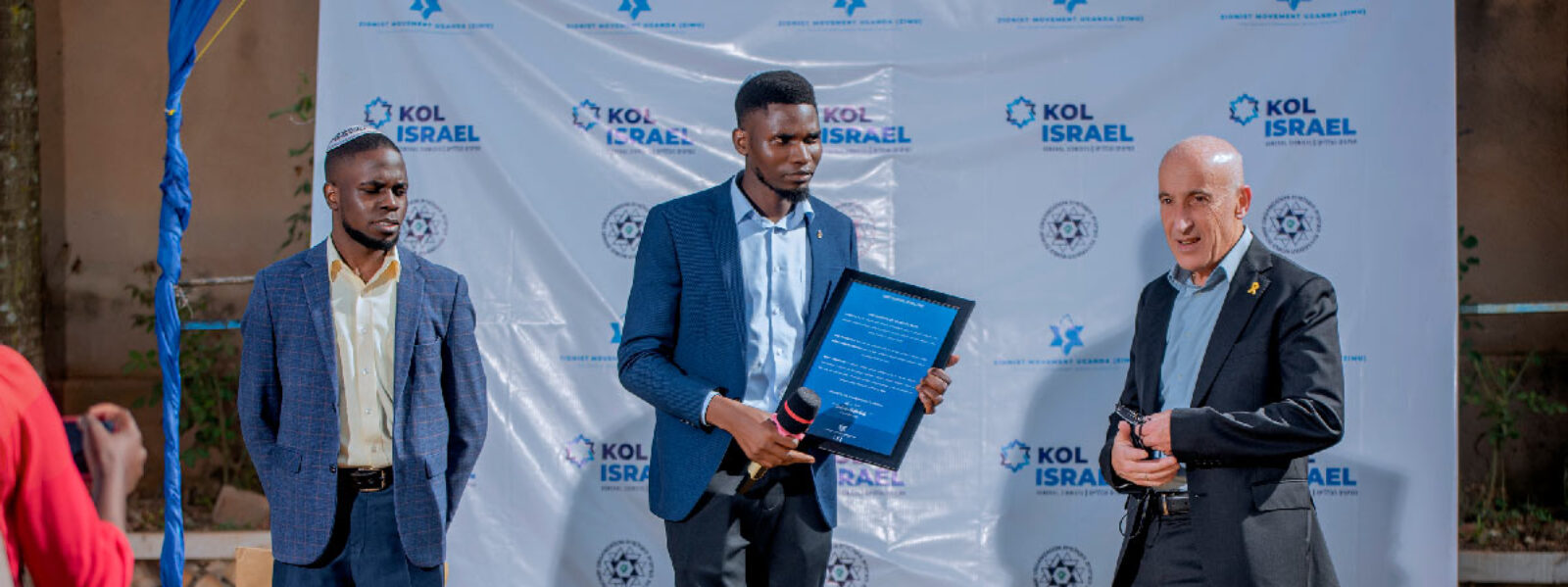
FROM THE NILE TO THE GREAT RIFT: A VISIT THAT MAY CHANGE EAST AFRICAN ORTHODOX JEWRY FOREVER

There’s something profoundly moving about walking into a synagogue thousands of miles from home and being greeted like family. For Rav Orah ben Avraham, that moment came not in New York, where he studies, nor in Israel, where his spiritual roots lie, but in Nairobi, Kenya. He had traveled there alongside Hoshea Silver Walugembe Magezi, Chairman of the Uganda Jewish Wealth Creation Initiative, representing the Mukono Orthodox Jewish Community. Their mission was simple yet monumental: sit down with Rabbi Yosef Zimmerman at the Nairobi Hebrew Congregation and finally discuss what it would take to consolidate Orthodox Judaism across East Africa; a conversation, they both felt, that had been delayed far too long.
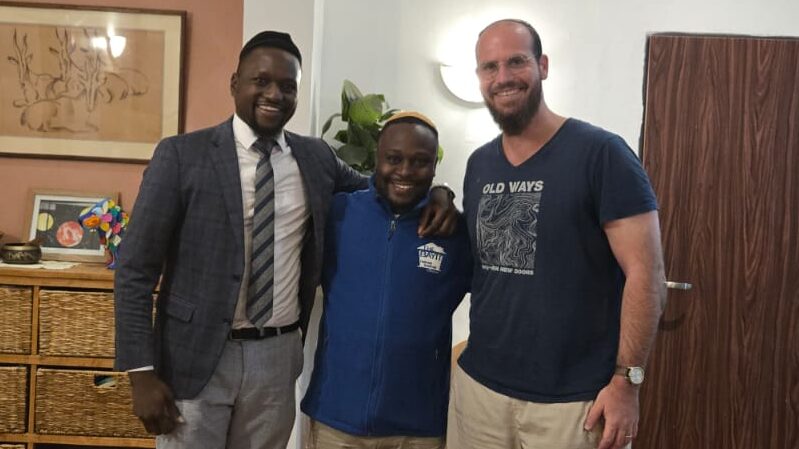
The visit began quietly enough. Before Kabbalat Shabbat, Rav Orah found himself in the social hall where congregants gathered for coffee. An elderly lady approached him with a warm invitation to join them, and no sooner had he sat down than when she looked at him and asked, straight out, “Who made you Jewish?” Rav Orah answered without hesitation, “We were converted by Rabbi Shlomo Riskin of Efrat.” The the lady seemed surprised by the answer, almost as if he had not expected to hear that name in this context. He paused, then shared something that could have shaken a less confident soul: the current Israeli Chief Rabbinate does not approve of Rabbi Riskin’s conversions. But then, almost kindly, he added, “Let that not discourage you. Just keep the spirit up.” And with that, the conversation moved on, but the words lingered.
They went into Kabbalat Shabbat together, and Rav Orah found himself swept up in the beauty of it all—the wonderful voices of the elderly Chazannim and the familiar melodies that felt like home even in a foreign land. After the service, they shared a wonderful meal with Rabbi Zimmerman’s family and some visitors who had joined for Shabbat. The next morning, beginning at nine, they gathered for Shacharit, and once again the voices of the congregation lifted him. There was Kiddush and snacks afterward, then sermons from the rabbis on the parsha of the week, and finally, they made their way to Rabbi Zimmerman’s home for lunch. It was there, over a relaxed meal, that the real conversation began.
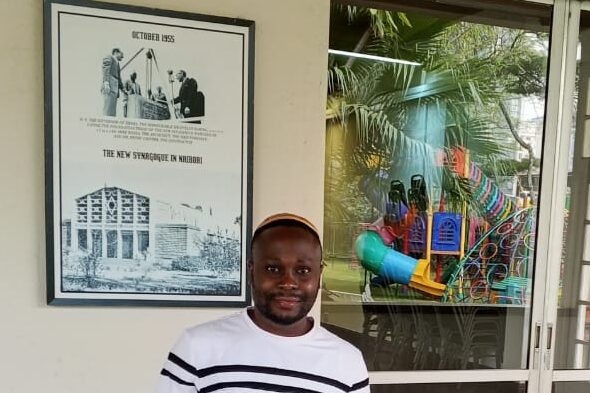
Rabbi Zimmerman spoke frankly. He told them that there is no conversion Beit Din certified by the Israeli Rabbinate anywhere in Africa, apart from perhaps South Africa, so for the Chief Rabbinate to recognize them, they would need to seek conversion in Israel, America, or Eastern Europe. Rav Orah listened and nodded. He had heard this before, many times. Last year, when he traveled to his Yeshiva in America, the same message came at him from so many directions, and yet, instead of feeling rejected, he had felt deeply loved by his friends and teachers. Rabbi Zimmerman seemed genuinely curious and asked, “How do you feel, keeping Judaism with such zeal, when you know the Rabbinate doesn’t certify your conversion?” Rav Orah thought for a moment and then answered with a calm honesty that seemed to surprise everyone at the table. He said, “According to the information I know, all that is politics. A lot of politics is in the Jewish people, where the Ashkenazi shun the Sepharad, the ultra-Orthodox do not always get along with the Modern Orthodox Jews, and I see the Litvak ultra-Orthodox Jewish community does not get along with the Chasidic Jews. So to me, it is not a surprise. It is about Hashem who sees my dedication, for He is faithful at rewarding.” Rabbi Zimmerman was taken aback by the young man’s resilience. “Please keep up the spirit,” he said warmly. “I will do whatever is in my power to help and support you grow and not to give up.” And then came a concrete promise that made Rav Orah’s heart leap: he offered to connect them to a wonderful shochet for goats and even expressed a hope to visit their community shortly before Rosh Hashanah to begin teaching them the laws of shechita. Rav Orah was thrilled. “Baruch Hashem,” he said, “we are really excited.”
What became clear over that Shabbat was how much the two communities already share. A remarkable connection emerged: both the Mukono Orthodox Jewish Community and the Nairobi Hebrew Congregation count most of their members as converts of Rabbi Shlomo Riskin of Efrat, Israel. That shared spiritual lineage created an instant bond, a sense that they were not just allies but family. Building on that foundation, they moved to practical matters. The leaders agreed to organize a convention of Orthodox Jewish communities across the region, with Rabbii Yosef coordinating Kenyan communities, Rav Orah coordinating Ugandan synagogues, and Yehudah Amir Kahalani, Head of the Bnei Levi Arusha Community, coordinating Tanzanian communities. They talked about combating the marginalization that has left East African Jewry feeling invisible for too long, strengthening the possibility of Jewish education so that children could grow up with pride and knowledge, establishing strict Kashrut observance and reliable Kosher certification for community centers, and collaborating to share materials, expertise, and knowledge because, as they wisely noted, what one community needs, another has and is willing to share. They also discussed the skills they could tap from the Ethiopian Jewish community, which carries ancient knowledge on Judaica products and has experience running Judaica factories that could serve as a model for the region.
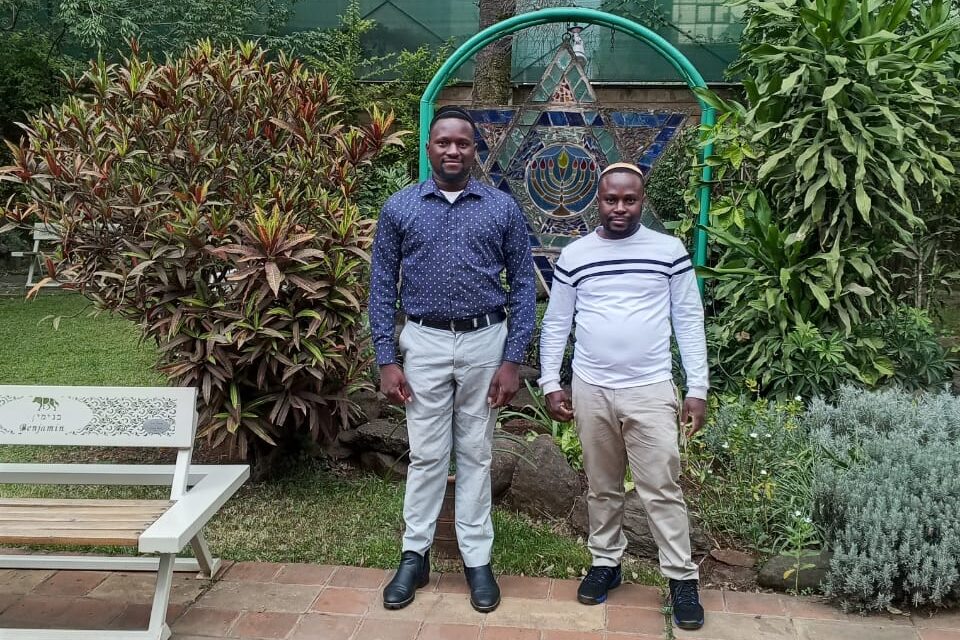
It was a reminder that East Africa is not just a place where Jews are struggling to survive, but a place where deep Jewish roots already exist, waiting to be nurtured and connected. What made this meeting different from so many others that have come before was the sense that something was finally being set in motion. For years, East African Jewish communities have navigated complex issues of identity and legitimacy in isolation, each community fighting its own battles, each leader carrying the weight alone. This new alliance, born over coffee and Shabbat meals and honest conversation, promises to change that. As Magezi put it, “We believe that this collaboration has always been dire and will solve the timeless question of interconnection.” It is a beautiful thing to witness—Jews from Uganda, Kenya, and Tanzania reaching across borders, not waiting for approval from distant authorities, but building something real and lasting on the ground. Yes, the politics remain complicated. Yes, the road ahead is long. But as Rav Orah reminded everyone in that room, the ultimate judge is not a bureaucratic body, but Hashem, who sees every dedicated heart. And if Rabbi Yosef Zimmerman is willing to pack his bags and travel to Uganda to teach shechita, if these communities are willing to sit together and plan a shared future, then maybe, just maybe, this long-delayed journey is finally underway. For the Mukono Orthodox Jewish Community, for the Nairobi Hebrew Congregation, for the Bnei Levi in Arusha, and for every African Jew who has ever wondered if they truly belong, this is a moment of hope. And hope, as any Jew will tell you, is the most powerful thing of all.
It’s a warm porous and pressure to see and hear such beautiful moves and journey for mojcs from our heartfelt leaders who inspire us to grow spiritually as confident and proud Jews,May Hashem continue to bless and open for us doors as mukono authodox Jewish community to embed all over the country with the true light of Torah to our souls.
Wow, so beautiful 😍. Thank you haShem. Can you add the havdallah videos back home .
I thank Hashem for the visit and for the kashrut mitzvah.
Thank you haShem.